Category Archives: Writing
Why I Write Contemporary Women’s Fiction
I think in some ways, the genre you write in chooses you. I always knew I would write a novel or two (or three, or four), but originally wanted to write mystery and suspense. I started a couple of stories, and jotted down the odd scene that popped into my head, but these stories never eventuated.
After a few years of a ‘too-busy-for-anything-else’ induced writing fast, I sat down to write again, and what came out was completely different.
Somehow, a character just took shape, and her dreams, fears, mishaps, and emotions poured out onto the page (this character was Miranda, one of the three main characters in my manuscript The Life Makeover Club).
What can we learn from Roger Hargreaves, creator of Mr Men & Little Miss books?
Happy Birthday to Roger Hargreaves; creator of the Mr Men and Little Miss series of children’s books!
As a child I loved these books, and as a mother I loved reading them to my child. The Mr Men and Little Miss series of books are a great example of books that stand the test of time. They are also a great example of ‘book branding’ – knowing exactly what type of books you write, how they are unique, and what recurring themes are present in your books. In this case, each book illustrates a dominant personality trait or feature that helps create the story within the book (eg: Mr Brave, Mr Chatterbox, Little Miss Bossy, Little Miss Late…etc). Each book stands alone but is linked to all the others through the title and theme.
Why is this brand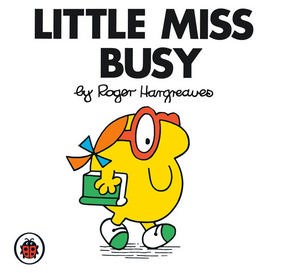 ing or recurring theme important?
It helps readers identify the books, and if they have enjoyed one of your books, it provides a sense of expectation and anticipation about future books. For authors, it helps in the placing and promoting of your book in the market. Also, if you have something linking each of your books, it helps in coming up with new ideas, because there is already a starting point of some kind. These links might be in having similar titles, characters, themes, or locations. For example, an author’s book titles might all be from song lyrics, or a twist on a classic fairytale. I have also seen authors use letters of the alphabet, colours, seasons, and names as a way to define their books.
Other ways books can be linked include:
Characters might reappear in future books, or future books might focus on secondary characters from the previous books. Each book might involve different characters from the same town or location, or each book might address similar themes and life issues, such as family relationships, stories of revenge, or stories of women standing on their own two feet after a major life challenge.
The books I write in the genre of women’s fiction are all about new beginnings; a character, or characters, undergoing a major change that results in them starting a new life path. In addition, I am playing with the idea of using ‘different months of the year’ to link each of my books.
Can you think of any books out there that are a good example of branding and recurring themes? If you’re a writer, do you make an effort to include a link of some kind from one book to the other? (oh, and… which Mr Men or Little Miss character are you?) 🙂
~ Juliet, aka: Little Miss Busy, Late, Stubborn, Quick, and Fun all rolled into one!
Have You Caught ‘The Writing Bug’?
Warning:
The Writing Bug is a relentless condition, often unresponsive to treatment, in which victims are compelled to make up stories involving people that don’t really exist, putting them in situations that don’t really happen, in order to (hopefully) entertain people and amuse themselves. The cause is unknown, although some cases can be attributed to its sister condition known as The Reading Bug (*see note at end).

Symptoms:
- A strong desire to write
- Sometimes, an inability to write, despite a strong desire to do so (go figure!)
- Meals are often skipped when they are in the midst of writing
- For some, meals are eaten at the desk instead of the dining table
- The victim may be addicted to coffee, tea, chocolate, or other stimulants
- Irritability when writing is interrupted
- Tendency to eavesdrop, stare at, and stalk interesting strangers
- May occasionally pull out a notepad to jot down God knows what
- Often runs to the computer yelling ‘I’ve got it!’ or ‘Now I know what to do in chapter seven!’ while in the middle of something else, such as a shower, dinner, a phone conversation, or in severe cases even childbirth
- The victim may hear voices in their head, but will deny this, saying it is their ‘characters’
- Tendency to have conversations with themselves. Again, they’ll say they are ‘just getting the dialogue right’, but this is just part of the denial
- The habit of cutting out pictures from magazines of gorgeous men (or women) to add to the so called ‘hero’ file
- An associated symptom called ‘procrastination’ may develop; resulting in the victim feeling compelled to perform menial tasks in order to prevent themselves from writing. Some have been known to catalogue their kitchen cupboards, alphabetise their book collection, or pull the fridge out to clean underneath it. In severe cases, one may even call their mother-in-law for a chat.
Complications:
- Often, the victim may appear to develop a growth on the end of their fingers strangely resembling a keyboard or laptop. Once there, it is hard to remove
- Victims may find their fictional world more interesting than the real world
- An addiction to Google can result, but they will say this is ‘all in the name of research’
- Victims will repeatedly check their emails in hope of hearing from a prospective editor or agent
- Published victims will use their ‘deadline’ as an excuse to avoid social events they don’t wish to attend, or as a way of getting out of exercise and dentists appointments
- A bad back or neck problems can result. It is thought that this is a psychosomatic complication elicited by their subconscious to ensure they can spend most of their time sitting down
- They often start hanging around with other victims, but this only fuels the condition
There is no cure for The Writing Bug.
*Note: The Writing Bug must not be confused with The Reading Bug, in which victims are unable to stop buying books and reading them, taking every opportunity to open those pages and delve into the story. It must be said however, that some cases of The Reading Bug will progress to a secondary affliction of The Writing Bug. For those that do, the prognosis is poor, as The Reading Bug fuels The Writing Bug.
Please spread the awareness of this life-changing condition with loved ones, before it’s too late.
~ Thanks to Toni & Deb for advising me of some extra symptoms 😉
How To Choose A Pen Name / Pseudonym
 Many authors choose to write under a pen name, or pseudonym, for a number of reasons.
They may be well known in another industry and want to keep their professional or business identity separate, they may want to protect their personal name (in case of their fiction career not working out, or the opposite: achieving worldwide success and having no privacy, or… just because!). An author might also prefer a pen name because it ‘sounds better’ than their real name or helps to ‘brand’ their book by creating a more appropriate and memorable name to represent the genre or topic of the book.
Some authors also have multiple pen names for different books, if they write under two or more different genres.
Whatever your reason, choose wisely. Here are some things I’ve learned about the process of choosing your own pen name, and some ideas to help you come up with a name you love:
1. A variation on your real name:
- You could keep your first name and just change the surname.
- Use your first two initials with a surname.
- You could keep your surname and change your first name.
- Consider a name that has the same initials as your real name.
2. A completely different name:
- Make a list of all the first names you really like (A baby name book or website can be useful).
- Make a list of all the surnames you really like (If you get stuck, look in the phone directory).
- Try combining a couple of different first names or surnames together to come up with something new.
- Make sure the name is easy to spell, so people can find you on the internet.
- If your name is Lily Sparkle and you’re writing a book for teenage boys about undercover agents, you might want to choose a ‘less feminine’ sounding name, or even switch to initials.
- You can use a random name generator website, such as: http://www.fakenamegenerator.com/ . These are also useful for coming up with character names for your story.
Tips:
- Make sure the name you choose is one you’re happy to be known by. Okay, so you might not become a household name like J.K Rowling or Stephanie Meyer, but… you might be!
- Practise signing the name and see how it feels. Does it flow well off the pen?, would you be happy to sign hundreds of books with this name?
- Before deciding on your name, come up with a shortlist of about five or so, and research them on the internet. Check first if the dot com domain name is available, that is; www.(insertpenname).com, because if you’re serious about being an author you need a website, and dot com’s are the most popular and easy to remember. Then search the web in both text and images (with filters turned off) to make sure; a) there are no other popular authors with the name, b) there are no other well known people from other professions with the name, and c) that your chosen name doesn’t also belong to an unfavourable person, or a ‘playboy’ centrefold model of the year, or something similar!
- You can also search Amazon.com to see if other authors have the same name.
- Ask on forums or writing groups for feedback about your name.
- Once you’ve come up with a winner, register the dot com web domain (even if you don’t plan on having a website just yet), and set up a Facebook and Twitter account with the name.
- You don’t have to register it as a business name, but when you get published, your publisher or a solicitor may be able to advise you of any legal concerns.
Writers – Do you have a pen name? If so, how did you come up with it?
Readers – how do you feel about authors using a different name, does it change the way you feel about the author if you know they’re not using their real name?
Happy naming!
Juliet (or am I?)
😉
I Think I’ve Written A ‘Snovel’
 What is a snovel you may ask? Keep reading…
When I was going through some pretty big changes in my life in 2009, I said to myself “It’s as though I’m having some sort of life makeover.”
Then, Ta Da! Light bulb moment.
What if I could write a story about a group of women going through their own life makeover, following their ups and downs as they participate in an exclusive club, in a humourous yet heartfelt way? And what if I could impart some snippets of wisdom along the way? Yes! I thought. What a great idea!
And then was born my novel, or my, er… snovel: A Self Improvement Novel.
Now don’t get me wrong, The Life Makeover Club is first and foremost, a novel; a fictional story about women’s lives. But, through the club meetings these characters attend, they learn some important lessons, and tips on creating their ideal life. It is my hope that when (yes, when, not if!) this book gets published, readers will not only find it an enjoyable read, but will also be inspired to make some positive changes in their own lives, and have their own life makeover just like I did.
So what do you think of the idea of a ‘snovel’?
Do you know any other books out there that could be called snovels?
And if you could makeover something about your life, what would it be?
Reading as a Writer
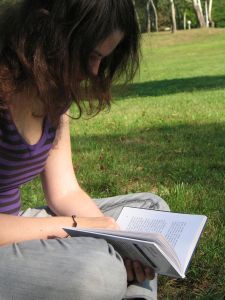 Once you officially realise you’re a writer, reading a book is never the same again.
Yes, you can still get swept away with the story and enjoy turning the pages, but there will always be that part of you that silently (or, not so silently) critiques the book as you read it.
Since committing to becoming a writer, the way I read a book has changed dramatically.
First, here is how I used to read a book, when I was a ‘reader’ only:
Reading, reading…
Oooh, I like the sound of him…
Reading, reading…
*Laughs*
Reading, reading…
*Cries*
Reading, reading…
Geez this is getting good…
*Phone rings*
Bugger off, I’m trying to read…
Reading, reading… (at 1am if it’s a page-turner)
The End.
Good book, can’t wait for the next one!
Okay, here is how I read now, as a ‘writer’:
Reading, reading…
I can really picture these characters
Reading, reading…
That’s a great way to show the conflict
Reading, reading…
Wait, do I detect some head-hopping going on here?
Reading, reading…
This protagonist sure has a strong motivation to reach her goal
Reading, reading…
*Laughs*
Reading, reading…
*Cries*
Reading, reading…
Damn! Why couldn’t I have written that?
Reading, reading…
*Jots down new idea for a novel*
Reading, reading…
Concupiscent? *Googles concupiscent*
*Adds concupiscent to list of ‘words I must use sometime so people think I’m intelligent’.
Reading, reading…
*Phone rings*
I better get that; it might be a publisher offering me a contract.
Reading, reading…
Oh, It wasn’t by the way.
Reading, reading…
Aha! I have a great idea *jots down notes frantically until 2am*
*falls asleep and loses place in book*
Reading, reading… (two weeks later)
I can’t remember what’s been happening, better go back to the start…
Reading, reading… (repeat above process)
(eventually) The End.
Good book, can’t wait till someone reads mine!
Now that I’m a writer, one thing’s for sure; no matter whether the book I’m reading is fantastic or just ‘okay’, I always appreciate the effort the author has put into it.
So how about you? If you’re a writer, do you find this affects your reading? If you’re a reader, do you find it easy to get totally absorbed by a book, or do you also stop here and there and notice the craft that’s gone into the book?
P.S – I bet some of you are now googling ‘concupiscent’!
The Never-ending Sentence…
While editing my manuscript, I noticed that I’m quite partial to the use of commas, and had to rearrange many sentences. The problem with excessive use of commas, is that they create a never-ending sentence, which, although allows for a thorough and flowing description of whatever it is you’re writing about, can be hard to read, making the reader feel like they’re gasping for air, and most likely making them forget what started the sentence, therefore having to re-read it to understand what’s going on, only to have the same problem repeat itself. See what I mean?
 So next time you go to add a comma, think again. Maybe add a full stop/period instead. Or… don’t.
Because sometimes, the opposite happens. The sentences become too short. Short sentences can be good. They give emphasis to certain words or phrases. This can provide a stronger emotional impact. But. Overuse. Can. Ruin. A. Paragraph. Or. Page. Or. Chapter.
The best sentences read easily, and have a good balance between the two types of punctuation. Like this one.
Keep it simple, read it aloud, and cull those excess little buggers. That’s what I’ve learned. 🙂
New Beginnings…
 I love the feeling of making a fresh start, like having a blank canvas of life in front of you, ready to be coloured with new experiences. I recently had a sea change, moving from the mountains to the ocean, and I love the fresh energy of this place! I feel like I’m starting over, creating a new life for myself filled with all the things I’ve always wanted to do and see.
Now, I don’t think you need to move to a new location to start over, sometimes a new beginning is simply in the mind; a change of attitude, or a fresh perspective on things. For me it’s about thinking how I want my life to be, and then taking action to make it a reality, and most importantly: following my passions.
New beginnings are a major theme in my writing; following characters through change as they go from one reality to another, and experiencing their joys, triumphs, and challenges along the way. I like the fact that when I start each new book, I get to experience my own new beginning all over again, through the eyes of my characters 🙂
My ‘Inspiration Spot’
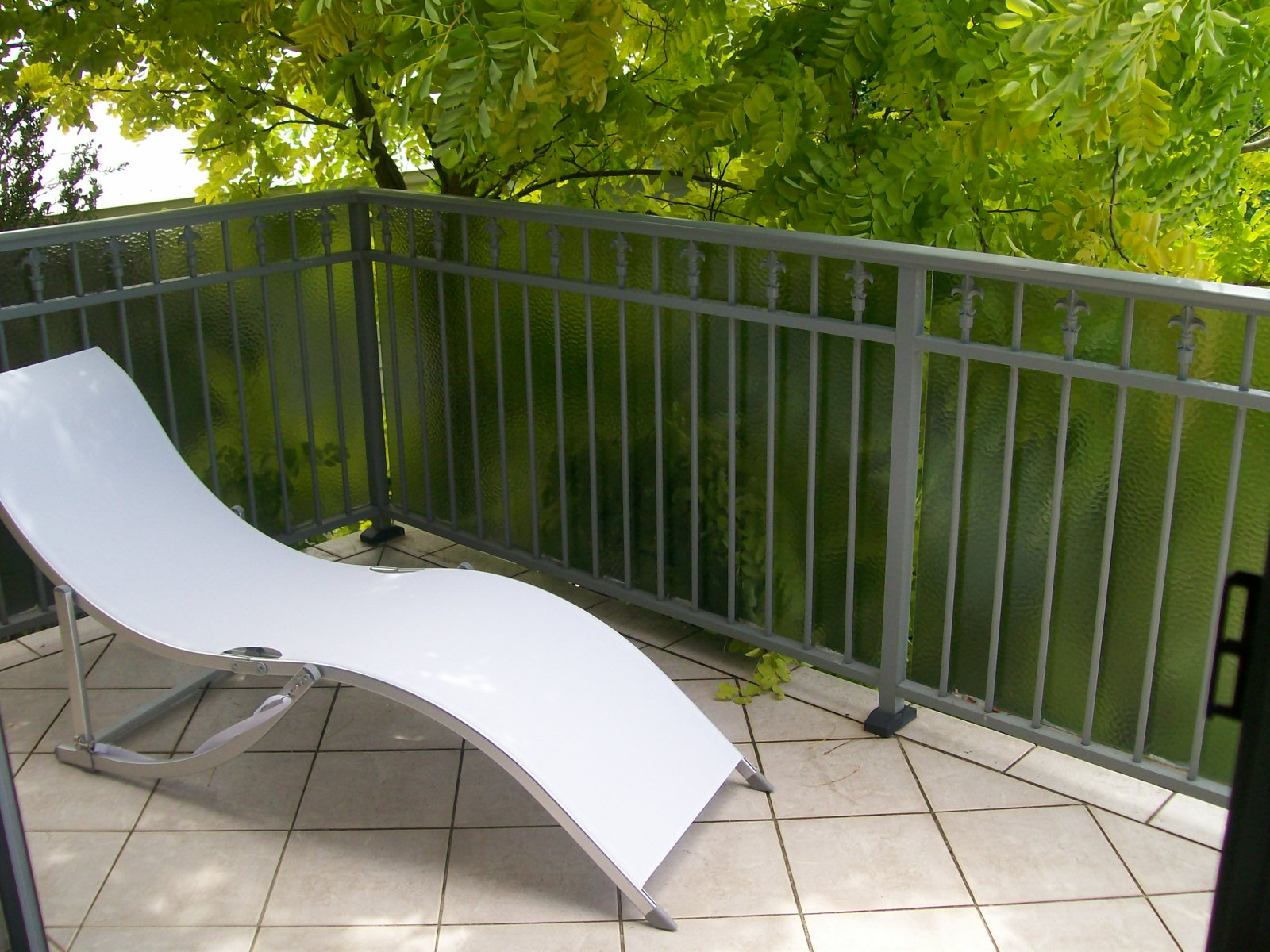 Inspiration sometimes strikes when you least expect it, and since moving house recently I set up a relaxing area on my balcony, which I now call my ‘Inspiration Spot’. Every time I’ve set myself down on the deck chair and looked up at the blue sky, the leaves of the tree dancing above my head, I’ve come up with new ideas. Great ideas. Whether it’s because I’m simply relaxing and letting my thoughts wander I don’t know, but something about my ‘spot’ ignites inspiration in me.
So now, whenever I need a boost, or a new idea, it’s off to the Inspiration Spot I go…
What about you? Is there a special place where you feel inspired?


 JULIET MADISON