Blog Archives
Free Critiques over long weekend!
Attention writers! Fancy a free, fast, five-page critique of your work? The first ten people to buy or gift a copy of FAST FORWARD and forward their receipt to me will get one!
 I’ll critique five standard pages (word document, 12 point font, double spaced) of anything fiction-related you’d like feedback on: the first five pages of your manuscript, a synopsis, back cover blurbs, or a brief synopsis and a few pages of a chapter – whatever you can fit into five pages in total. Any genre.
Here’s how to score a critique:
1. Buy FAST FORWARD anytime from now till the 10th June (Queen’s Birthday long weekend), or if you’ve already got it you can gift a copy to a friend.
2. Send your receipt or a screenshot of your proof of purchase to me at fastforwardbook(at)gmail(dot)com – replace (at) with @ and (dot) with .
Receipt should be dated 8th, 9th, or 10th June, or if you’re international and not yet up to Australian time and it’s still the 7th, I’ll accept that too. Basically, from the moment this blog post is live you’re eligible.
If you’re one of the first ten, I’ll let you know and you can send me your five pages.
Easy! 🙂
The critique will be via Microsoft word ‘track changes’ (comments in the side margins and some suggestions within the manuscript), and will include general feedback on the story as well as grammar, showing vs telling, dialogue…etc. It may also include the odd smiley face and exclamation mark. You have been warned. 😉
You can keep updated on the contest by following me on twitter or facebook.
Get in quick! Buy FAST FORWARD worldwide via…
Escape Publishing, Amazon, Amazon UK, iTunes/iBookstore, Kobo, Google Play, B&N/Nook, JB Hi-Fi.
Then forward your receipt to fastforwardbook(at)gmail(dot)com
I look forward to reading your work!
~ Tweet this post by copying and pasting any of the following into a tweet:
Want a 5 page critique? Get in quick at @Juliet_Madison’s blog! http://bit.ly/ZxQmp8 #critique #amwriting
Writers! 5 Page critique of synopsis &/or manuscript to first 10 people! Details here via @Juliet_Madison: http://bit.ly/ZxQmp8
Editing Tip: 10 Words to Search For in Your Manuscript
 When I’m editing, and before I do a final read through and tweaking of my manuscript, I use Microsoft Word’s ‘find’ feature to search for the following ten words. These words can usually be deleted in order to tighten up the writing and focus on ‘showing vs telling’.
1. almost
Sometimes ‘almost’ can work but often it’s not needed. Eg: With his sunken eyes and pallor he almost looked like a ghost. An example where it may work could be: She almost slammed the door in his face. Or instead of that, it could be changed to: She resisted the urge to slam the door in his face.
2. very
Usually there is a stronger word available to replace the need for ‘very’, or the phrase can be changed completely to something else. Eg: ‘very sad’ could become ‘despondent’. Eg: It was very sunny. Better: It was sunny. Even better: She squinted as the sun’s glare rebounded off the pavement and hit her eyes.
3. started
When this is used alongside ‘to’, as in ‘started to’, it’s probably not needed. Eg: She started to get dressed. Better: She got dressed. Even better: She zipped her jeans and put on a t-shirt.
4. began
This is similar to ‘started’. Eg: It began to rain. Better: Droplets of rain dampened her hair, or: He flicked on the windscreen wipers as rain blurred the road ahead.
5. stood up
Remove the word ‘up’. If someone stood, it’s obviously up.
6. sat down
Remove the word ‘down’. If someone is going from a standing position to a sitting position it is obviously ‘down’. Except if the person is lying down and then changes to a sitting position.
7. heard/hear
Removing ‘heard’ or ‘hear’ gives the reader a more vivid experience. Eg: She heard someone call her name. Better: A voice called her name. Eg: I could hear the rain pelting against the window. Better: rain pelted against the window.
8. saw/see
Same as with ‘heard’. Eg: She saw his face through the window. Better: His eyes glared at her through the window. Eg: I could see him coming towards me. Better: He came towards me.
9. felt
Telling a reader what a character felt is not as powerful as showing them. Eg: She felt relaxed and happy. Better: She leaned back in the chair and a smile eased onto her face.
10. just
Eg: If she could just find a way to get through to him, he might understand. Eg: “The shop is just around the corner.”
There are more suggestions of words to search for at this very useful site.
Have a search of your manuscript and see how many of these words you can find and change to improve your book.
Are there words that you often overuse in your writing?
P.S. – Interested in Juliet’s Writing Courses? Check them out here.
[Guest Post] Choreographing a Love Scene Underwater, and other things your craft book never taught you. – Ros Baxter
Please welcome fellow Escape author Ros Baxter to the ‘Writing Wednesday’ segment of the blog today! Ros is the author of Fish Out Of Water (Escape Publishing) and co-author of Sister Pact (Harper Collins).
 Some people write romance. Some write chick lit. Some write fantasy. Me? I’m an omnivore, in reading and in writing. Like Mae West said: “Ten men waiting for me at the door? Send one of them home, I’m tired.”
That’s me when it comes to books. I’m far too nice to say the word whore, but I never really met a genre I didn’t like.
When I read, it’s all about the book. When I write, it’s all about the story. For me, this time, and this character, it had to be fantasy. Rania, my deep sea mermaid living incognito as a small town cop, hammered at my brain. She was tough. She was cool. There was simply no saying no to her.
I told my sister: I’m writing a mermaid book.
She said something like: Ooooh, cool. Fantasy.
I said something like: No, don’t be silly, you know I don’t write fantasy.
Then she said something like: Erhh…you know mermaids aren’t real, right? I mean, I you had those pyjamas back when you were seven, but…
Et cetera.
So fantasy was kind of an untrod road for me. And, like most paths less travelled, I had to learn some things along the way. Good and bad. I had lots of feedback from critique partners and other readers, and it helped shape what worked and what didn’t.
So first up, the good. You know what I love about fantasy? You don’t just get to break the rules, you get to write your own. If the whole sex-with-a-tail thing is just way too mind-bending – voila! No tails. If your action takes place between the deepest part of the ocean floor and small town USA and your characters need to whizz quickly between the two? No problems. Just invent a cool new way of travelling almost instantly – melting down to the very droplets in the air, with the aid of a very cool, very small blue fish.
And then the bad news. You know what’s tough? There are some parts of any story that transcend genre, and they are the bits you absolutely have to nail. They’re also the hard bits. Story. Heart. And, you guessed it, sex.
And the problem is, very few of us have ever been intimate seven miles down. With a boy who’s kind of a fish. So what to do? Two things really.
First, approximate. Okay, so I don’t know how a mermaid gets lush and loose. But I know some stuff about dolphins, whales, and other sea creatures (well, at least the internet does, and we’re really good friends). I can look at the reality and approximate from there.
Second, keep what you know. The stuff that’s real (and important) from your own experience. Touch, heat, connection. And then use your imagination about how those realities mesh with the new world.
Third (okay, I know I said two things, but like I already said, I’m not much of a rule-follower), don’t throw the baby out with the bathwater. Remember the basics – character, conflict, motivation. Whether your character is human, fish, or something in between, your readers are humans. And we need those human connections.
I hope readers can find that spark of connection with my wild heroine and her story of love, secrets and danger.
Thanks for having me.
[Thanks for being my guest, Ros! ~ Juliet]
Ros Baxter has been writing since she was eight and penned a whimsical series of short stories about a race of tiny people who lived on a rainbow. While they were a hit in the playground, a few things intervened – including a career in social policy and four noisy children. Ros started writing again in earnest three years ago. In that time, Ros has secured a two-book deal with Harper Collins Australia, published Sister Pact (a romantic comedy co-written with her sister Ali) and Fish Out of Water (Escape Publishing on 1 April), been a contributing author to the e-anthology URL Love, and finaled in the STALI competition.
Ros writes fresh, funny, genre-busting fiction. She digs feisty heroines, good friends, quirky families, heroes to make you sigh and tingle, and a dash of fantasy from time to time.
Ros also runs a successful business consulting to government and the private sector. She teaches professional writing skills and has authored a writing guide, Clarity.
Ros lives in Brisbane, Australia, with her husband Blair, four small but very opinionated children, a neurotic dog and nine billion germs.
You can email Ros at rosbaxterink@gmail.com or find her at www.facebook.com/RosBaxterInk, on twitter @RosBaxter, or www.rosbaxterink.com.
FISH OUT OF WATER Blurb:
 “It’s Janet Evanovich’s Stephanie Plum meets Splash in a sexy, smart-talking debut about a mermaid in a desert, a city under water, and the secret that no-one is supposed to uncover.”
Dirtwater’s straight-talking Deputy Sheriff has a lot on her plate: a nicotine addiction that’s a serious liability for a mermaid, a solider-of-fortune ex who’s hooked on her Mom’s brownies, a gorgeous, naked stranger in her shower, and a mysterious dead blonde with a fish tattoo on Main Street.
Oh, and one other thing.
She’s scheduled to die on her thirtieth birthday – in three weeks – unless she can ‘change the course of destiny and save the world entire’. Throw in a Mom who’s the local Mayor and a Dad who’s been locked in the county jail for twelve years, and that’s all the trouble she needs without her mermaid roots coming back to haunt her.Rania’s heading home to Aegira for a family wedding but she’s starting to have a sinking feeling that’s got nothing to do with hydroporting seven miles under the sea and everything to do with some weird connections that seem to be emerging between her, the dead blonde, her Mom’s shady past and a ten thousand year old prophesy. Now if she can just steal a corpse, get a crazy Aegirian priest off her case, work out who the hell’s trying to kill her and stop sleeping with the fishes, she might be able to unravel the prophesy, the mystery of the missing choirgirls and the secrets hidden in her Mom’s past. And maybe even save her own ass while she’s at it.
Buy Fish Out of Water.
Find out more at www.rosbaxterink.com
Top Ten Things I’ve Learned About Writing A Novel
I’m over at the Life In A Pink Fibro blog today talking about how to write a romance novel and the ten things I’ve learned on my journey to publication. It was interesting to look back on where I was a few years ago to where I am now. I hope you’ll get a lot out of this post!
And if you haven’t visited my blog for a while, here are some other recent posts you might like to check out:
– I took the plunge like Jenn J McLeod did and interviewed myself! Past Present Future with…me!
– Annie Seaton shares her Promotional Tips for Authors.
– Sandra Antonelli and I discuss the issue of ‘older’ women in fiction at the Escape Blog.
I’m also thrilled to have received some great reviews for Fast Forward recently, over at Novel Escapes, YA Novelties, and Chick Lit Club! A BIG thank you to the reviewers for taking time to read the book and write the reviews. 🙂
Coming up soon on the blog, an interview with Natalie Charles, a guest post by Ros Baxter, and a post on Twitter Basics for Authors. Stay tuned!
~ Juliet
SISTERS AT HEART – my short story
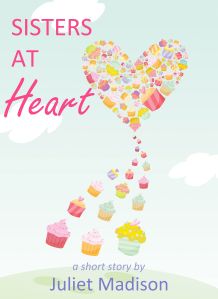 Every now and again I get the urge to write a short story. Especially if there’s a competition (Aries competitive nature). Earlier this year Country Style magazine held a short story competition with the theme ‘Cooking from the heart.’ The $5000 prize was a big motivator to enter, but even though I didn’t win I enjoyed writing my story and am proud of the result.
When I heard what the theme was, it was the perfect theme to match to a story idea I’d had for a while, so with enthusiasm I sat down and wrote the story all in one go till the early hours of the morning.
2000 words doesn’t seem like a lot, but with short stories you have to plan the plot and create characters just like in a novel, in fact, sometimes short stories are more challenging because of the restriction in length. You have to focus on a moment in time with only a couple or a few characters and have a satisfying emotional ending to the story. Sometimes the ending is not an ending but the start of something new, but the event that takes place in the story is the driver for that new beginning.
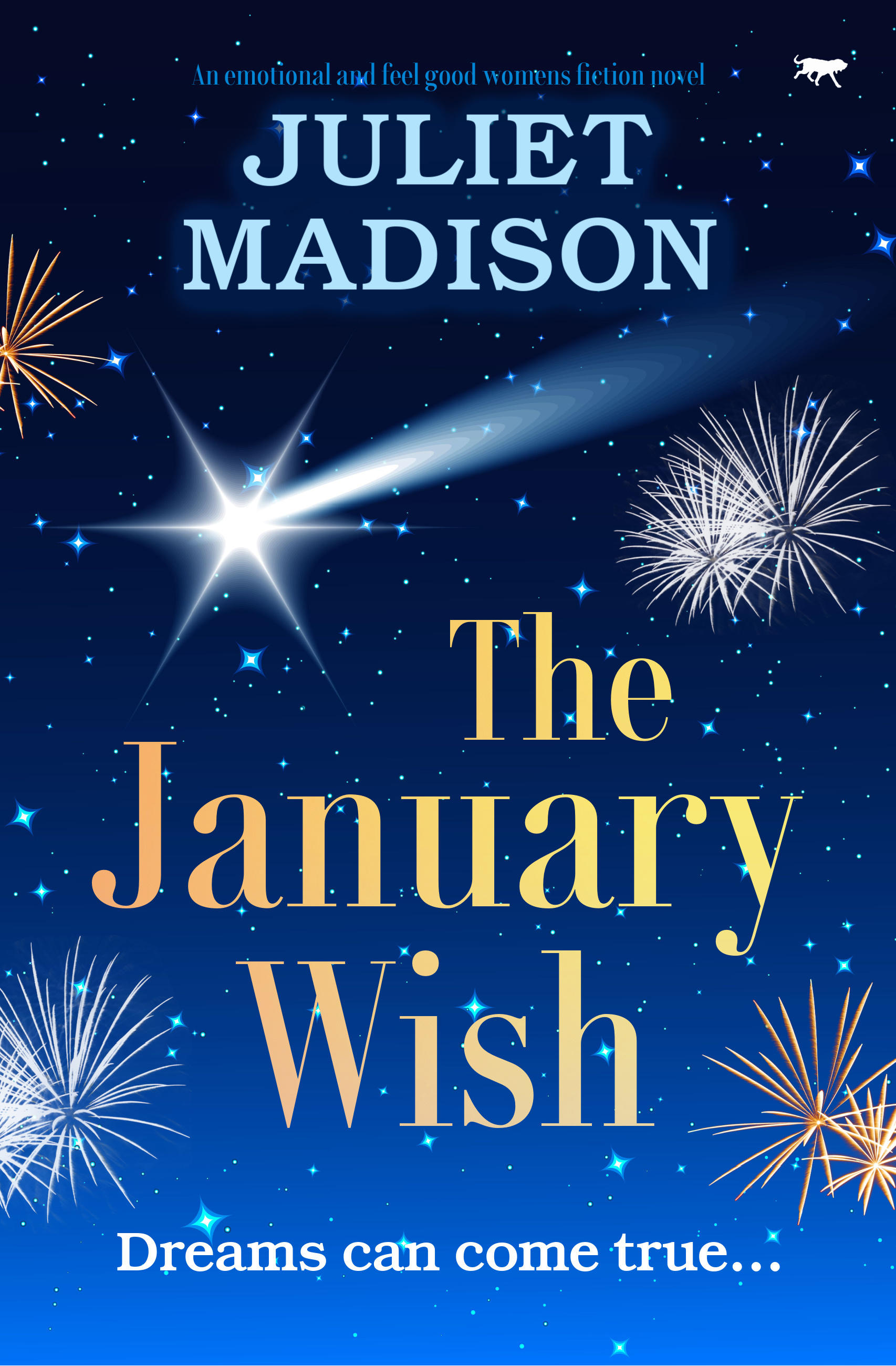
My ‘cooking from the heart’-themed short story, SISTERS AT HEART, is now published on Smashwords. It’s set in the fictional town of Tarrin’s Bay where I am setting a series of novels, the first being THE JANUARY WISH which is completed and the second being FEBRUARY OR FOREVER which is a work in progress. SISTERS AT HEART is women’s fiction with a twist; there’s a little surprise at the end that some people may guess and others may not.
Here’s the blurb…
Grieving the loss of her sister and breakdown of her marriage, Carrie moves to the small seaside town of Tarrin’s Bay for a fresh start with her young son. When she volunteers for the school cake stall, a remarkable coincidence has her realising the incredible power of the human heart.
You can read the first page here, and if you like the sound of it and want to see what the twist is, the full story is only 99 cents 😉
I’d love to hear what you think about it! I might write more ‘Tarrin’s Bay’ short stories.
Do you have any short stories published? If so, let me know in the comments 🙂
Novellas: The Writer’s Quick-Fix
 Writers often slave over their manuscripts for months, sometimes missing out on sleep, and the writing is only half of it. Then comes editing, revising, editing, and so on. But because we love our craft we keep going – book after book after book. There is nothing like the reward of a finished book and a story well told.
Another option for those who need a writing ‘fix’ is to try your hand at writing a novella. Longer than a short story but shorter than a novel, novellas allow us to tell a story in a shorter amount of time but with that same thrill of creating characters and scenes that will take us (and the reader) on an emotional journey.
Shorter doesn’t necessarily mean easier though – you have been warned! You still need to work on characterisation, goal, motivation, and conflict, and be able to show enough character growth through the shorter word count. But they are usually much quicker to write and edit, and because of the advance of e-publishing and self-publishing, novellas seem to be more widely available nowadays.
Novellas can be produced more quickly, you can explore certain ideas that may not be sustainable through an entire novel, they are good for seasonal stories (eg: Christmas), and they can also be used as prequels or sequels to longer works of fiction. For the reader, they are a bite sized read that can be devoured in one go during a lunch break or before bed, but often still providing that same sense of emotional satisfaction that comes from reading a novel. They are a good way to discover new authors too, without committing to a full length book.
I recently wrote my first novella, STARSTRUCK IN SEATTLE; the first in a series of novellas linked by a quirky character named Lulu. It took me about three weeks to write the first draft. And when I say three weeks, I don’t mean three full-on weeks, I mean snippets of writing time here and there around motherhood and other duties! So if I didn’t have much else to do, I could probably have written it in about a week (says the optimistic part of me 😉 )
How did I come up with the idea for my novella? Sleepless in Seattle was on television and because I am a sucker for stories of ‘fate’ and romance that is ‘just like magic’, an idea about an online matchmaker and Love Coach came to me. But in this case, the matchmaker has a little secret. Here’s the blurb for the story…
Actress Anna Hilford has a major crush, but not on just any guy – Karl Drake, the leading actor in the television drama on which she works as an extra. Sick of being loveless and second best in the shadow of her famous sister, Anna seeks the help of Lulu from LuluTheLoveAngel.com to give her the courage and determination to follow what she believes is her destiny and transform from ‘extra’ to ‘leading lady’ in both life and love. What she doesn’t realize however, is that Lulu really is an angel and destiny has other ideas.
I found writing this novella fun and rewarding, though still a bit of hard work here and there! And in case you’re wondering, Lulu’s website does exist, though she told me she’s having a little vacation on Cloud Nine and will hopefully be back soon 😉
~ Have you written a novella? Feel free to give yours a plug in the comments.
~ Do you read novellas? What are some that you’ve enjoyed reading recently?
The Power Of Accountability For Writers
 A gourmet dinner at the hotel buffet after the recent RWA conference led to more than just a full stomach. It led to the birth of a new writers club for me and my fellow dining companions. We decided we were committed to being up on the conference stage to collect our First Sale Ribbons as soon as possible, and created a club to help each other achieve that goal – the goal of our first publishing contract.
Our desired outcome comes down to several factors of course, some of which are outside our direct control, but we believe that through commitment to our craft, consistency in action, support of each other, and confidence in our work we can achieve that outcome. And when the time is right for us, we believe we will be on that stage celebrating our first sale.
The club is now in its third week, and already I have achieved more than I would have without the club. Each Monday we state our weekly goals to the group, and share what we achieved from the week before. Doing this makes us focus on the little steps needed to lead towards our bigger goals, and helps us to be more productive.
For writers, life often gets in the way of being consistent with writing, especially when you’re not yet contracted and you feel like you should be doing something else. But having a few like-minded people around you who share your goals is a huge help, and helps you to prioritise your writing and take action towards your dreams.
There is something exciting about writing down your goals and ticking them off as they are completed, even more so when you share these goals with others. Having a writing buddy or a small writing group gives you the power of accountability. No one wants to check in with the group and say they didn’t achieve their goals, so knowing you have to share your progress with the group acts as a strong motivator to get things done, and to stay on the path you have chosen.
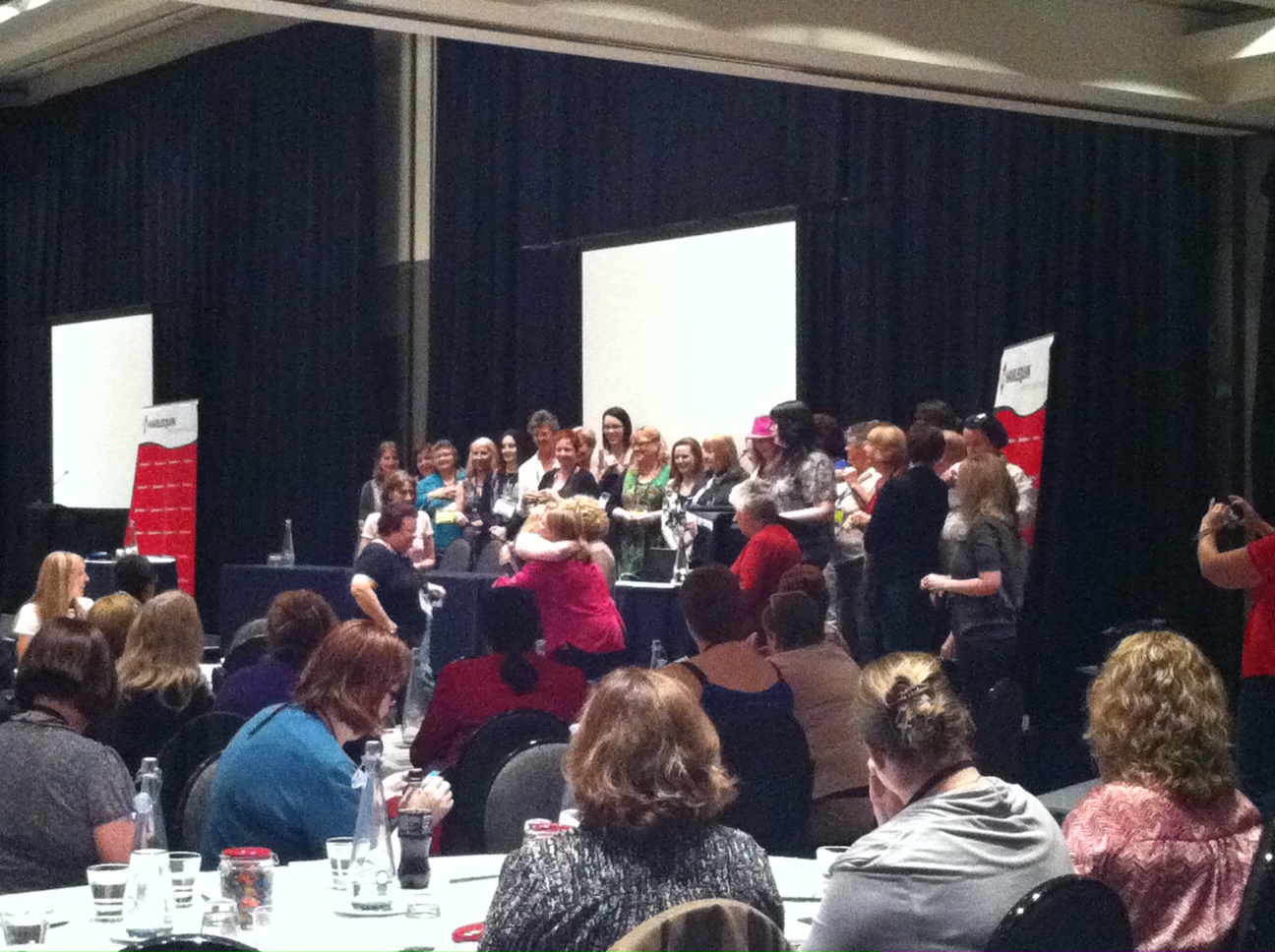
Authors receiving their First Sale Ribbons at the 2012 RWA Conference
If you don’t have a writing buddy or group, I strongly recommend joining or starting one. First of all, join RWA (The Romance Writers of Australia), as they are such a supportive organisation for writers and I have learned so much through them and made great new friends. You don’t even have to be a romance writer to join, we have writers of many different genres in RWA. Then, hook up with a suitable critique partner so you can provide feedback on each other’s work. RWA has a critique partner match-up scheme, or you can find one by asking around online and sharing a few samples of work to see who you click with. I found mine rather organically… we began a conversation on facebook earlier this year and never stopped, and after sharing a sample of work we decided we would like to work together and have been critiquing happily ever since (and our facebook chat is still continuing to this day!). Now through my new writers club I have an additional CP, as it can be good to get two different opinions on your work (plus, I have found the processing of critiquing another writer’s work helps me with my own writing).
 So if you find yourself getting to the end of the week and wishing you had written more, learned more, or read more, then consider starting an ‘accountability group’; a group that doesn’t necessarily have to read each other’s work, but exists for the main purpose of helping each other achieve weekly or monthly goals. It makes a huge difference! 🙂
Writing a Synopsis: Some Things I’ve Learned
 We all know about four-letter dirty words, but only writers know about the eight-letter dirty word – SYNOPSIS.
A synopsis is a summary of a novel’s main plot points and characters, from the beginning right through to the end. Most agents and editors like to see one when assessing your manuscript for possible publication, so it’s something almost all writers have to do at some point. I’ve noticed many publishing professionals request a ‘brief synopsis’, which I take to mean about one or two pages at the most. Others may ask for a more detailed five or six page synopsis. But this is something many writer’s struggle with, me included.
How can you possibly take a 300-400 page story and explain it in only one or two pages?
I don’t claim to be an expert on this (far from it, although I do my best!), but here are some things I’ve learned while writing my own synopses. I’ve called it ‘The Russian Doll Method’!
Open your manuscript and summarise all the main plot points, as though you’re giving someone a running commentary on a TV show or movie they can’t see. Use present tense. Don’t worry about length at first, just get the main plot points down (big Russian doll), and add in a taste of your voice, so if it’s humorous, show some of the humour, if it’s suspenseful, add that element to the synopsis too, as long as you don’t leave any questions unanswered. A synopsis’ purpose is to tell a potential agent or editor/publisher what the book is about and what happens throughout the story, including the ending.
Once you’ve written the summary, go through and highlight the most important events affecting the main character/s in yellow. Then highlight the slightly less important events, but still a required part of the story, in another colour such as grey (just one shade, not fifty. Sorry, couldn’t resist;)). You might find that some events can be left out of the synopsis, for the sake of brevity.
Now start again, writing the synopsis focusing on the highlighted parts, and tightening up the sentences (smaller Russian doll). Check the length to see if you need to cut further, and if so, go through the highlighting process again (even smaller Russian doll). Also, see if some plot events can be combined into one sentence as an overall summary of the situation, so rather than:
John arrives at his grandma’s house and notices the door is unlocked. He searches all the rooms in the house, but finds them empty, so he walks out the back door and through the overgrown garden. She isn’t there either. He goes back inside and stands in the kitchen, scratching his head, then notices a half-eaten toasted sandwich resting on the table. He picks it up and finds it is still warm. Thinking his grandma might have been abducted only moments ago, John immediately calls the police. (forgive the crappy writing, this is just an example!)
Using the highlighted parts (which I’ve underlined instead because I don’t know how to highlight on this blog!), the paragraph could be changed as follows:
When John arrives at his grandma’s house it is empty, and her half eaten lunch is still warm. Terrified something bad has happened to her only moments before his arrival, John calls the police.
And if you had to cut it even further it could be changed to:
John calls the police on finding his grandma’s house empty.
Sometimes it’s easier to work this way, starting with a long synopsis and gradually breaking it down. If you end up trying this process, I’d love to hear how it goes for you – let me know!
How do you go about writing a synopsis, are there any valuable tips you’ve learned through the process?
THE LUCKY SEVEN!
My friend Efthalia has bestowed a tag on me in her fun post, “The Lucky Seven.”
The challenge: Post seven lines from an unpublished work of fiction.
My current WIP Fast Forward is a humorous women’s fiction story, centred around aspiring supermodel Kelli Crawford who wakes on her twenty-fifth birthday to find she’s a fifty year old housewife married to the high school nerd. In this scene she is meeting her husband for the first time, having just discovered her unfortunate reflection in the mirror.
The Golden Rules:
- Go to page 7 or 77 in your current manuscript
- Go to line 7
- Post on your blog or Facebook page the next 7 lines, or sentences, as they are – no cheating
- Tag 7 other authors to do the same
Extract: FAST FORWARD, Page 7, line 7:
“Okay, okay. I just wanted to make sure you were alright. And wish my wife a happy birthday of course.” He leaned in for a kiss but I pushed him off, horror overtaking me.
Wife? I’m not his wife, and he’s certainly not my husband! Grant is supposed to be my husband. Well, after tonight’s inevitable proposal that is. Oh God, tonight! My birthday party. I can’t go looking like this!
A high-pitched jingling sound interrupted my thoughts and the man made a strange movement; pinching his watch with his thumb and forefinger and appearing to pull some invisible strand to his ear.
© Juliet Madison 2012.
And the seven lucky nominees are –
Alli Sinclair
Diane Curran
Susan Child
Jenn J Mcleod
Imelda Evans
Kez Ptolemy
Nicola Marsh
I look forward to reading your seven lines if you choose to participate!
Don’t forget to post it in my comments then on your own blog with your seven lucky choices. 🙂
How My Son Got Me Into Writing AND Cooking
Since it’s my Mouthwatering May blog special event, I thought I’d share with you how I got into both cooking and writing, and the role that my son played in this…
 Let’s start with the cooking… now, I’m no Masterchef, and nor do I want to be, but I did develop a bit of a knack for cooking when my son was little. As it turns out, he had a few food intolerances, and after doing an elimination diet with him I discovered he was sensitive to almost EVERYTHING I tested him with. Preservatives, MSG, colours..etc were the main culprits. So I began buying ‘additive free cookbooks’ and also experimenting with recipes of my own.
It was around this time I was also studying for my naturopathic qualifications, so I became more aware of food and nutrition and its impact on the body, and I was wanting to cook fresher, healthier meals. Also, I later discovered in addition to many additives he was also intolerant to dairy foods and gluten (found in bread, pasta, biscuits, and almost every single packaged food!), so once again I donned my well-used apron and experimented with even more recipes.
There were many disasters; homemade breads that crumbled to oblivion, inedible muffins that tasted like rocks, and don’t get me started on the pathetic cheese-less pizzas! But time and practise are great teachers, and soon I was whipping up meals and snacks that not only he liked, but other people too. Now, eating this way is a way of life, and I rarely follow a recipe. I’m an intuitive cook – I throw things together and make it up as I go.
 Some of my favourite sweet creations (which have no sugar either! …except for the icing ;)) are: choc hazelnut and coconut muffins, gluten and dairy free banana cake, and choc macadamia cookies. And some of my favourite meal creations are: chicken soup with broccoli-stem ‘noodles’, roast balsamic chicken with mushroom, zuchinni, and carrots, lamb cutlets with sautéed bok choy, mushrooms and mustard dressing, warm chicken and red cabbage salad, grilled salmon with steamed broccolini and toasted pine nuts, butter-less butter chicken, and smoked salmon and avocado rice rolls (see pic above). Yum!!
So how did my son get me into writing? I always had a vague idea in my mind that I might write a book one day, but it was one of those things you never really think will happen. I wrote poetry as a teenager, and when I became a mother I started writing a few snippets of random scenes that would pop into my head, and even began a suspense novel, but gave up at chapter two!
Anyway, life moved on, I became busy with other things, and my son began pestering me to take him out of school and home-school him. At this time, I was running a busy and successful business, and could barely cope with helping him with his homework, let alone consider the idea of doing it ALL day EVERY day. But as my son neared high school and his high-functioning autism became more of an issue, it became apparent that the school system just wasn’t suited to his individual needs, and things became too much of a struggle (that’s another story!). So, I left my business to have a break and think things over for a while, eventually deciding on distance education instead of full-on homeschooling. Luckily, after a detailed application process, he was accepted, and although he’s not a fan of school in general, it’s been the best thing for him.
So what’s this got to do with writing? Well, after I left my business and made the commitment to do what was best for my son, the idea of writing a book resurfaced in my mind. I thought… “If I don’t do this now, I never will.” So after we’d finish school for the day I would spend time working on my first novel. And this time, I made it past chapter two (yay!), and eventually, after one year, I reached THE END. It was the best feeling EVER, and I wanted more. So I started my second novel, and nine months later typed THE END again. And now, I am nearing the end of my third novel which so far I’ve been writing for about four months (I must be getting faster!).
So there you have it, if it wasn’t for my son convincing me to home-school him, I may have continued working long hours in my business, with no time for anything else, and with my old ‘one chapter suspense novel’ being the only thing I’d ever written.
 I’ve found my true passion, and with commitment to my craft, and a few gluten free choc macadamia cookies by my side as I write… I couldn’t be happier! 🙂

 JULIET MADISON