Blog Archives
My poem made from book titles!
As an avid reader, writer, and creative person in general, (with a slight, okay… a fierce competitive streak), when I saw a contest for making a poem out of book titles I just had to enter!
Thanks to my writer buddy (and collage poet) Diane for sharing the link to the contest, and to Janet Reid for organising it and reading through all the entries.
I had a lot of fun pulling books from my neatly organised shelves and playing around with the titles until I came up with the final result; a romantic comedy complete with a black moment and happy ending 🙂
I didn’t expect to make the top four finalists, so that was a nice surprise!! You can see the results and the winning poem here.
Here is my poem:

So why not give this a go yourself? C’mon, have some fun and show me what you end up with!
Author Interview – Darlene Fredette
 Today I’d like to welcome Darlene Fredette to my blog!
Hi Juliet, it’s great to be here!
1. Congratulations on your upcoming novel, Keeping Secrets. Can you tell us a little about it?
Keeping Secrets is about Samantha Witherspoon, who is grieving the loss of her grandmother. A surprising clause in her grandmother’s will requests that Samantha return to her childhood home to have it renovated and sold. While there, she meets handsome contractor, Matt Sullivan. As their relationship grows, many secrets are revealed, and Samantha is holding a secret of her own.
*You can also read a blurb and excerpt of Keeping Secrets below, at the end of this interview 🙂
2. How did you get the idea for Keeping Secrets?
I wrote this story ten years ago, so I’m not exactly sure on its inspiration, but I am certain that it just came to me one day while cleaning the house. That’s when all my stories seem to pop into my head.
3. How many manuscripts have you completed?
I have two completed manuscripts, three more in the works, and several stories plotted out in my journals.
4. How long have you been writing for, and what do you do when you’re not writing?
I’ve been writing stories since I was a teenager. When I’m not writing, you can find me hanging out with my family. I also like to read, watch movies, walk the dog, BBQ, and sit by the fire-pit on a warm summer evening.
5. Do you follow a specific writing routine, or do you just go with the flow?
I wish I had a specific routine, but life’s daily distractions have a tendency to get in my way. Once I am focused, I quickly get into the story and lose track of time. And when I need a break from my laptop, a pen and journal become my best friends.
6. What is the best writing advice you’ve received?
Keep writing. Never stop what you love to do.
7. Who are your favourite authors, or what are some of your favourite books?
Penny Jordan, Jane Porter, Jennifer Crusie, Beth Kendrick, Sarah Addison Allen, Liz Fielding, and many more. Their books are some of my top favourites.
8. What are you working on now?
I’m currently editing a completed story, Guilty As Charged. It’s about two lawyers who butt heads over a case and their past. Their banter and undeniable attraction is fun and sexy. I also have a ‘sweet’ Christmas story, a dysfunctional family series, a fashion mayhem story, and several others in the works.
9. If you could go anywhere in the world for one day, where would you go?
It’s a tie between two places, though I’d have to go for more than one day. First, I’d love to visit Australia for its beauty and warmth. Second, Arizona for its scenery, warmth, and to take my husband to the auto shows in Scottsdale.
10. What advice would you give to other writers out there?
The same advice I was given, keep writing and never stop what you love to do.
11. When and how can people get a copy of your book? Do you have a website and/or blog you’d like to share?
Keeping Secrets will be available in ebook in August 2011. To stay posted on its release date and my current WIPs, please visit my web site: http://findingthewritewords.blogspot.com
Thanks for visiting, Darlene!
Make sure you check out Darlene’s book in August. I’ve been lucky enough to get a sneak peek at the first few chapters, and I can’t wait to read the rest!
Thank you, Juliet for the fun interview!
About Darlene ~ An avid reader since childhood, Darlene loved to put a pencil to paper and plot out stories of her own. Following a career path in administration, she excelled in the art of editing and design, which led to a successful position as Director of Administration and Marketing. Thanks to the support of her husband and daughter, Darlene has been able to fulfill her dream to write full time. Residing in Nova Scotia, she can be found writing in her home office with the family dog, a yellow lab, never letting her too far out of his sight. To learn more about Darlene visit her web site: http://findingthewritewords.blogspot.com
Keeping Secrets – Blurb
Samantha Witherspoon is a strong, independent, businesswoman, determined to prove her worth as the heir to her late-grandmother’s chain of cafés. When she clashes with Matt Sullivan, the stubborn contractor who refuses her renovation project, Samantha returns to her childhood home to convince him. Sparks fly, tempers flare, and Samantha quickly realizes that befriending the rugged contractor isn’t as easy as she thought.
Despite her reservations, desire ignites between them under the city stars of Montreal. Matt’s mere touch makes her long for the kind of love Samantha thought she’d never have. When a mystery box reveals devastating family secrets, Samantha decides it’s time to come-clean with Matt. But before she can, her own secret arrives on her doorstep. Samantha’s heart is torn. Will a promise made to her late-grandmother prevent her from finding true happiness?
Keeping Secrets – Excerpt
Samantha’s ears twitched at the sound of a crackling coming from the ceiling just above her. She watched as a trickling line split and plaster showered downward like a heavy rainfall.
Suddenly a set of strong arms encircled her and held her tightly, taking the breath from her chest. Her feet were lifted from the concrete floor and she was yanked backward, slamming her and her rescuer into a wall. An image out of a romance novel, where the hero sweeps the woman of his dreams into his arms, declaring his everlasting love, flashed through her mind…until another large piece of plaster fell from the ceiling, crashing loudly on the floor before shattering into thousands of tiny pieces. Samantha no longer saw a vision of two lovers, but one of her, crushed under the debris. She took several deep breaths.
Hammers stopped and were followed by the rush of work boots running across the concrete. “Matt, you okay? Is the lady hurt?” they asked. “That was a mother of a close call!” another said.
Her hero ignored the men and set her back on her feet. His once warm brown eyes were now cold and throwing daggers. “What the hell are you doing here?”
“I…I was…looking for you.” Winded, her breathing was heavy.
From the drooping brows and harsh pressed lips, she could tell Matt was not at all happy to see her, but Samantha couldn’t have been more pleased. Her search was over and the incredibly attractive man she had been seeking had rescued her.
* * *
Don’t Just Write What You Know, Write What You Care About
 This is one of my favourite bits of writing advice, and as soon as I read those simple words in Donald Maass’ book, ‘Writing the Breakout Novel’, I grabbed my trusty pink highlighter and slid it across the page. Mostly because I liked the advice, and partly because I love highlighting things! (I love the smooth feel as they glide along the page, and the colours you can get these days are gorgeous! But I’ll save that discussion for some other self-indulgent blog post, perhaps about stationary addiction).
It is SO important to write what you care about, because as Donald says, ‘If you don’t care, why should anyone else?’
Don’t write something just because you think it’s popular, or there’s a gap in the market. You have to like and care about what you’re writing in order to enjoy it and do it for the long haul.
This advice got me thinking about what I care about, and why I have written about certain topics. In my novel, The Life Makeover Club, I’ve written about women getting a chance to create the life they always wanted. I care about people being able to enjoy their lives and do the things they’re passionate about, rather than feeling like they’re stuck in a rut, or trapped in a life that isn’t what they want. Too many people settle for second best, or say ‘this is just my lot in life’, without thinking or taking action towards making their life better. Sure, there are some things that can’t be changed, but a lot can be, and probably one of the most important things you can change is your attitude.
My novel also explores motherhood, and how to be a good mother while still keeping your own identity – something I know many mothers struggle with. I’ve also highlighted (there I go again!) the humourous side to motherhood, as daily parenting can bring with it both challenging and funny moments, and sometimes you just have to laugh!
Another thing I care about creating awareness of is the often silent ‘emotional abuse’ in some relationships. Domestic violence gets a lot of press, and rightly so, but those suffering in an emotionally abusive relationship often suffer in silence because it is not seen, and the affected partner can feel like they are making a big deal out of nothing, or that maybe they are just too sensitive. I wanted to show a character going through this and finding the strength to come through it; to say ‘I don’t have to put up with this.’
Other themes, issues, and topics I care about, and are writing or plan to write about in future are:
– reconnecting with family
– personal empowerment
– trusting your intuition
– the reality of autism and the gifts it can provide
– the importance of being proactive with your health
– remembering and celebrating life’s little pleasures
– the need for a ‘place to call home’
– the valued role of grandparents
– thinking outside the box – ‘What if?’
– entrepreneurship
– accepting people as individuals
– the valuable role of ‘the arts’ in our lives
– second chances, persistence, never giving up
– miracles
What about you?
What do you care about?
What are you inspired to write or read about?
Setting The Scene – bringing the story to life through a sense of place
Setting is usually an important part of a novel, and can often become a character in itself. Although much of what I write is character-driven, the setting I choose helps ground the story in time and place, which adds to the overall ‘realism’ of what’s taking place. I love reading a book where you feel like you are part of the setting; watching or experiencing what’s going on – feeling the sun on your skin, or the cool ocean breeze, or taking in the ambience of a popular cafe. Good writing will draw you into the setting and the story, making it easy to form a mental picture of everything. But although it’s important to set the scene, I try not t o overdo the description of a place, preferring to get stuck into the dialogue or action of the plot.
In my novel, The Life Makeover Club, the characters and plot drive the story forward, but certain places and settings are important in the book. It is set in Sydney, Australia, and most of the story takes place right in the city itself. The reason I chose this setting is twofold: 1, I only live a couple of hours from Sydney and have been there many times, so it was easier for me to write about a place I knew, and 2, I thought an exclusive ‘club’ involving people wanting to makeover their life would be more likely to take place in a well-populated area, so I chose the city of Sydney.
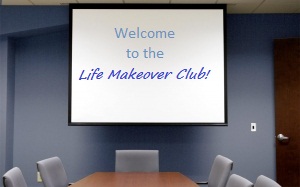 The club meetings take place in The Ruby Room of City Health and Fitness (a fictional health centre). The gym in the same centre is also an important setting, where fitness fanatic Gina attends regularly, and fitness-phobic Miranda attends once or twice, after some well-meaning coercion!
 Miranda works the reception desk at the 5-star Harbourside Towers, a luxurious (fictional) hotel with gold-plated everything! Toward the end of the novel, a charity ball takes place in the hotel’s ballroom, which was a great excuse to showcase the grandness of this particular setting, not to mention a few plot twists as well! The ball scene is one of my favourite scenes in the book! Because this scene is set on New Year’s Eve, I also couldn’t help but bring the fabulous Sydney New Year’s Eve fireworks into the story.
One thing I love about Sydney is the department store window displays at Christmas time. As a child, my family would often spend a night in the city to wander around and look at the displays. I always found them so enchanting, and so I had to make mention of them as well! Click here to see some beautiful window displays!
 At one point in the story, one of the characters is lucky enough to spend a week at a beautiful health retreat in a small beachside town, Tarrin’s Bay (again, fictional, but based on a real town). After almost a week of eating a vegan diet however, lover of fine food and wine, Miranda, escapes down to the local markets and indulges in a banana ice cream. This simple change of setting results in a major turning point occurring in her life, but I won’t give away what happens to her! This is also a favourite scene, as it is based on where I live, and I am writing more stories set in this beautiful beachside location and really bringing out the uniqueness of the setting.
Oh, and another setting used in the book is a hospital emergency room, where I put my poor character through a rather unfortunate incident involving a designer dress, morphine, and a pair of scissors! I’ll say no more!
…So how much do you think setting affects a story? Are there any books you’ve read that have really brought about a strong visual picture in your mind of the location the characters are in?
Why I Write Contemporary Women’s Fiction
I think in some ways, the genre you write in chooses you. I always knew I would write a novel or two (or three, or four), but originally wanted to write mystery and suspense. I started a couple of stories, and jotted down the odd scene that popped into my head, but these stories never eventuated.
After a few years of a ‘too-busy-for-anything-else’ induced writing fast, I sat down to write again, and what came out was completely different.
Somehow, a character just took shape, and her dreams, fears, mishaps, and emotions poured out onto the page (this character was Miranda, one of the three main characters in my manuscript The Life Makeover Club).
Have You Caught ‘The Writing Bug’?
Warning:
The Writing Bug is a relentless condition, often unresponsive to treatment, in which victims are compelled to make up stories involving people that don’t really exist, putting them in situations that don’t really happen, in order to (hopefully) entertain people and amuse themselves. The cause is unknown, although some cases can be attributed to its sister condition known as The Reading Bug (*see note at end).

Symptoms:
- A strong desire to write
- Sometimes, an inability to write, despite a strong desire to do so (go figure!)
- Meals are often skipped when they are in the midst of writing
- For some, meals are eaten at the desk instead of the dining table
- The victim may be addicted to coffee, tea, chocolate, or other stimulants
- Irritability when writing is interrupted
- Tendency to eavesdrop, stare at, and stalk interesting strangers
- May occasionally pull out a notepad to jot down God knows what
- Often runs to the computer yelling ‘I’ve got it!’ or ‘Now I know what to do in chapter seven!’ while in the middle of something else, such as a shower, dinner, a phone conversation, or in severe cases even childbirth
- The victim may hear voices in their head, but will deny this, saying it is their ‘characters’
- Tendency to have conversations with themselves. Again, they’ll say they are ‘just getting the dialogue right’, but this is just part of the denial
- The habit of cutting out pictures from magazines of gorgeous men (or women) to add to the so called ‘hero’ file
- An associated symptom called ‘procrastination’ may develop; resulting in the victim feeling compelled to perform menial tasks in order to prevent themselves from writing. Some have been known to catalogue their kitchen cupboards, alphabetise their book collection, or pull the fridge out to clean underneath it. In severe cases, one may even call their mother-in-law for a chat.
Complications:
- Often, the victim may appear to develop a growth on the end of their fingers strangely resembling a keyboard or laptop. Once there, it is hard to remove
- Victims may find their fictional world more interesting than the real world
- An addiction to Google can result, but they will say this is ‘all in the name of research’
- Victims will repeatedly check their emails in hope of hearing from a prospective editor or agent
- Published victims will use their ‘deadline’ as an excuse to avoid social events they don’t wish to attend, or as a way of getting out of exercise and dentists appointments
- A bad back or neck problems can result. It is thought that this is a psychosomatic complication elicited by their subconscious to ensure they can spend most of their time sitting down
- They often start hanging around with other victims, but this only fuels the condition
There is no cure for The Writing Bug.
*Note: The Writing Bug must not be confused with The Reading Bug, in which victims are unable to stop buying books and reading them, taking every opportunity to open those pages and delve into the story. It must be said however, that some cases of The Reading Bug will progress to a secondary affliction of The Writing Bug. For those that do, the prognosis is poor, as The Reading Bug fuels The Writing Bug.
Please spread the awareness of this life-changing condition with loved ones, before it’s too late.
~ Thanks to Toni & Deb for advising me of some extra symptoms 😉

 JULIET MADISON